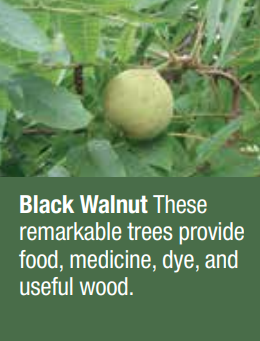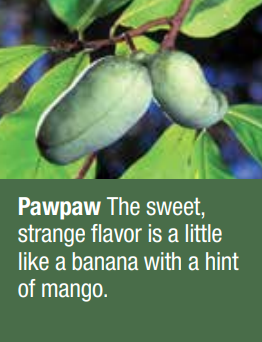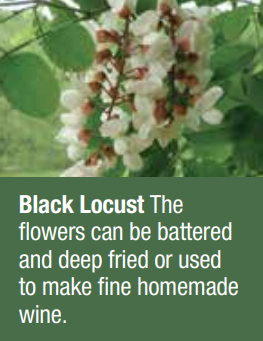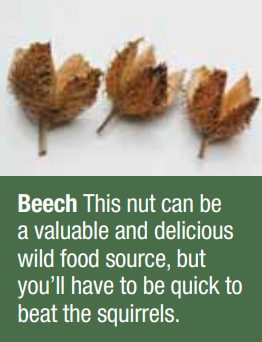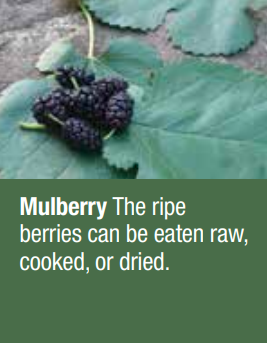
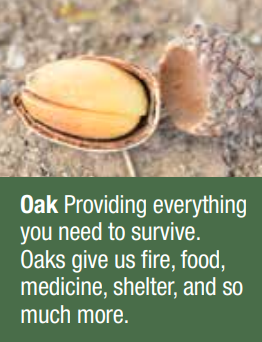
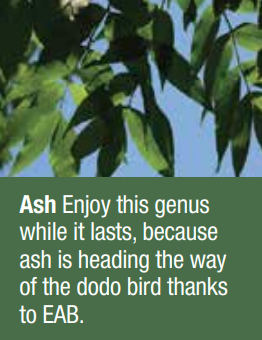
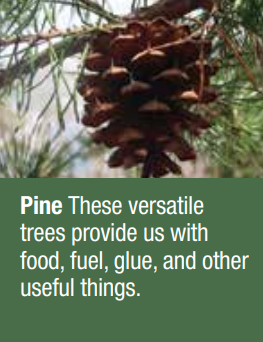
Meet a Tree: Learning More

Once again, in this issue of Minnesota Woodlands, we are deviating from the ‘norm.’ We assume, as MFA members and likely owners of a woodland, you know your basic tree identification. But do you know some intimate details about those trees? For instance, do you know…

  • The ripe berries of some species of cedar can be used as a spice.

  • The bark from many species of poplar contain salicylates, just like their cousins the willows. It is from this original source that aspirin is derived. HOWEVER, levels of salicin vary from species to species (even tree to tree). Do your homework before using local cottonwoods for analgesic tea!

  • One ounce of nutmeat from an oak acorn contains 100 calories.

In this edition of Minnesota Woodlands, we are sharing a link to “15 Trees Every Outdoor Lover Should Learn to Identify.” This is taken from Outdoorlife.com, author Tim MacWelch.

If you want to be a true outdoorsman or woman, and a true survivor, you’ve got to become a plant person. I know, I know—it’s not as cool to walk around with your nose in a book as it is to sling lead or light stuff on fire. But at the end of the day, plants give us so much that we’d be crazy not to pay attention to them. Some of the most helpful (and long-lived) plants are trees, and it’s our job as survivalists to learn the merits and problems with each species we encounter.
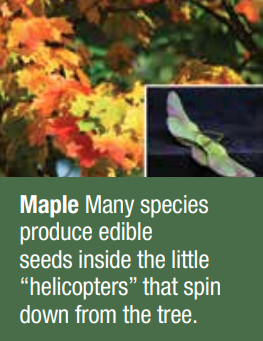
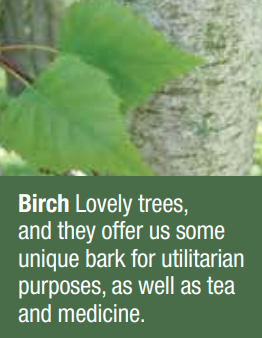
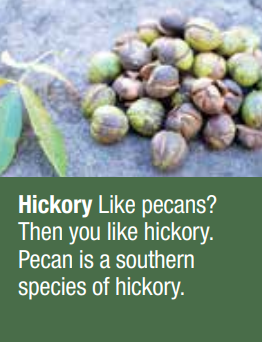
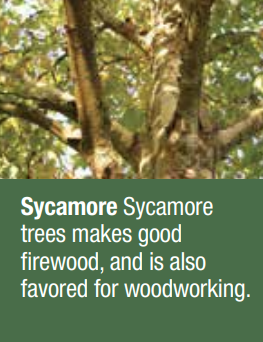
Sure, trees all look very similar at first, but once you start to see the subtle differences, you’ll start to see trees as easily a bloodhound can pick out a fresh scent. Trees have given our ancestors the building blocks for self-reliance, and those same trees are here to help us today. From fiber and medicine, to food and drinking water, many tree species have something to offer us through all four seasons. Get to know these fifteen common genera through this gallery of useful survival trees (and a few bonus woody plants).
This post is an excerpt from the original article. We’re just sharing this great piece with our readers! All credit goes to the original author and website. Please click the link to read the full content on their website.

This content is aggregated for informational purposes only. We do not claim ownership and encourage readers to view the full article on the original publisher’s site via the provided link.

READ NEXT

Half of Amazon insects could face dangerous heat stress

​A sweeping new study of more than 2,000 insect species reveals a troubling reality: many insects may be far less capable of coping with rising temperatures than scientists once hoped. Researchers found that while some species living at higher altitudes can...

Climate models may be missing massive carbon emissions from boreal wildfires

​Northern wildfires may be more dangerous for the climate than they appear. Researchers found that fires in boreal forests can burn deep into peat soils, releasing ancient carbon stored for hundreds or thousands of years. These slow, smoldering fires often look small...

Climate models may be missing massive carbon emissions from boreal wildfires

​Northern wildfires may be more dangerous for the climate than they appear. Researchers found that fires in boreal forests can burn deep into peat soils, releasing ancient carbon stored for hundreds or thousands of years. These slow, smoldering fires often look small...

For every known vertebrate species, two more may be hiding in plain sight

​Earth’s vertebrate diversity may be far richer than anyone realized. A sweeping analysis of more than 300 studies suggests that for every known fish, bird, reptile, amphibian, or mammal species, there are about two nearly identical “cryptic” species hiding in plain...

Atacama surprise: The world’s driest desert is teeming with hidden life

​Even in the ultra-dry Atacama Desert, tiny soil-dwelling nematodes are thriving in surprising diversity. Scientists found that biodiversity increases with moisture and altitude shapes which species survive. In the most extreme zones, many nematodes reproduce...

Massive asteroid impact 6.3 million years ago left giant glass field in Brazil

​For the first time ever, scientists have uncovered a vast field of tektites in Brazil — mysterious glassy fragments forged when a powerful extraterrestrial object slammed into Earth about 6.3 million years ago. Named “geraisites” after Minas Gerais, where they were...

Congo basin blackwater lakes are releasing ancient carbon into the atmosphere

​Deep in the Congo Basin, vast peatlands quietly store enormous amounts of Earth’s carbon — but new research suggests this ancient vault may be leaking. Scientists studying Africa’s largest blackwater lakes discovered that significant amounts of carbon dioxide...

Congo basin blackwater lakes are releasing ancient carbon into the atmosphere

​Deep in the Congo Basin, vast peatlands quietly store enormous amounts of Earth’s carbon — but new research suggests this ancient vault may be leaking. Scientists studying Africa’s largest blackwater lakes discovered that significant amounts of carbon dioxide...

Climate change is accelerating but nature is slowing down

​As the planet warms, many expected ecosystems to change faster and faster. Instead, a massive global study shows that species turnover has slowed by about one-third since the 1970s. Nature’s constant reshuffling appears to be driven more by internal ecological...

Europe’s “untouched” wilderness was shaped by Neanderthals and hunter-gatherers

​Long before agriculture, humans were transforming Europe’s wild landscapes. Advanced simulations show that hunting and fire use by Neanderthals and Mesolithic hunter-gatherers reshaped forests and grasslands in measurable ways. By reducing populations of giant...

Need help in taking care of your trees?