
Post originally published for Itasca Woodland Services by Marissa Berguson
As the long, bright days of summer give way to crisp air and auburn hues, northern folk settle into their apple pie-baking, hot cocoa-sipping, turkey-basting, marshmallow-toasting, mukluk-wearing traditions of fall. As we enjoy these times of transition into wintery weather, time starts to slow down and feelings of warmth and holidays with family fill the atmosphere with cozy anticipation and excitement. Our outside projects wind down as the forest begins its journey into dormancy amid the sparkling frost and golden leaves scattered on the ground.
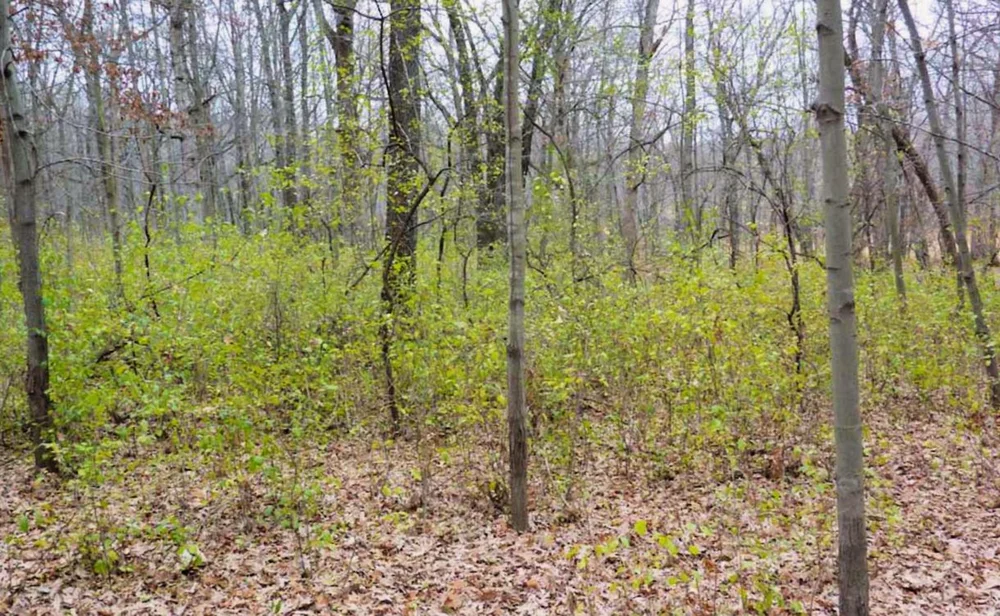
As we cast our gaze on the rapidly changing scenery from the comfort of our bay windows and back porches, a quick glimpse of color catches the eye. Against the greyed hues and golden contrast of late fall, a brief flash of bright green leaps out amongst the bare trees. Seeming out of place, one might be wise to investigate this patch of green.
This is a classic example of stumbling upon a non-native and oftentimes invasive plant species in the woods.
What is it?
You may find that the green leaves of several non-native plant species may endure deep into fall and possibly early winter, some of which are very common to the northern climates of Minnesota.
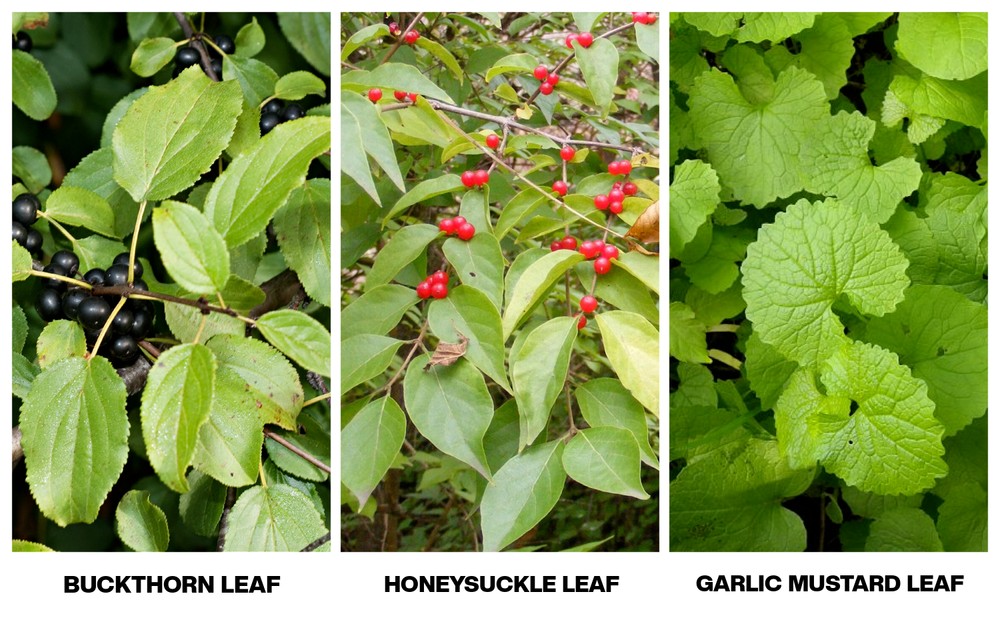
The most common occurrences of late-fall green leaves are on Buckthorn, Non-Native Honeysuckle, and Garlic Mustard.
Garlic Mustard is a flowering plant, whereas Buckthorn and Non-Native Honeysuckle, while they do produce blooms, are considered shrubs. All of these species are non-native to the US and are considered invasive. Each of these plants have characteristics that allow them to overpopulate vigorously and dominate landscapes quickly, sapping nutrients and sunlight from native plants and ultimately destroying native environments entirely.
How do I identify them?
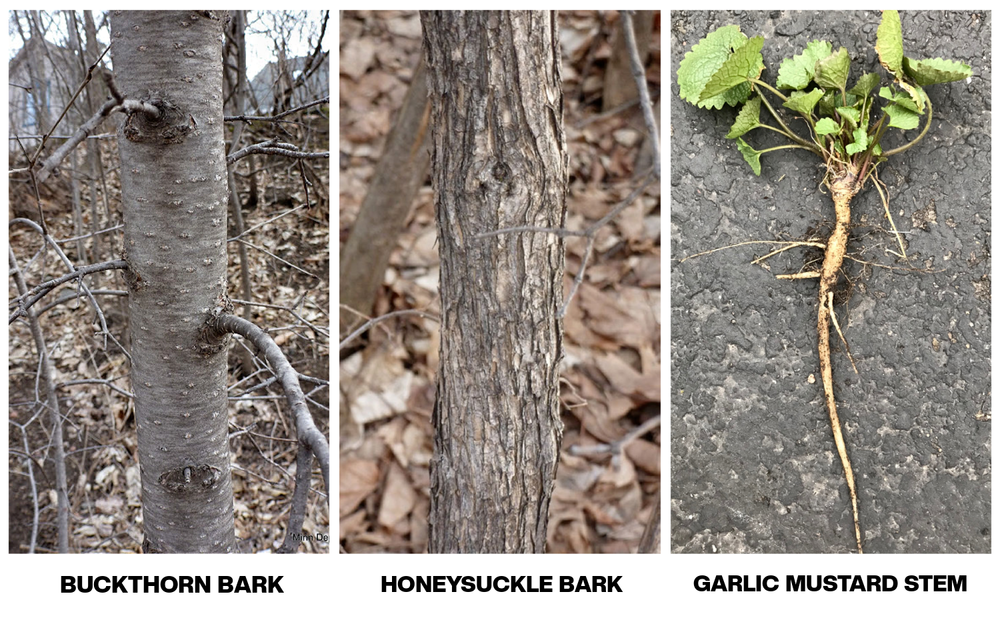
All three of these species can be spotted most easily, as mentioned above, by the presence of bright green leaves still hanging on during times when most native vegetation has gone dormant. Non-Native Honeysuckle can also be identified by breaking open a twig or branch and observing a brown center or pith – this is different from native Honeysuckle because natives will include a white or natural-colored pith. You can also “look under the hood” of the Buckthorn plant by scraping its bark to reveal orange cambium, which helps identify it against potential native look-alikes which will have green cambium.
See below for pictures of identifying features that can help you spot these species year-round.

What can I do about it?
If you spot Buckthorn, Non-Native Honeysuckle, or Garlic Mustard on your property, there are a list of ways to deal with each kind of species most effectively:
Buckthorn & Honeysuckle
-
Using a saw, cut the trunk near the base of the tree.
-
Apply herbicide to the entire surface area and edges of the cut trunk. Be sure the herbicide includes the ingredient Glyphosate or Triclopyr. Herbicide application is best done during fall months when woody plants transport their nutrients back down into their roots. Applying herbicide during this time will aid in transporting the herbicide chemicals into the root systems and destroying the plant.
-
For small seedlings, hand pulling or using a hoe to remove the entire plant along with its roots is effective without having to use an herbicide.
-
Be sure to dispose of any berry-producing branches in an area where they cannot reach the ground to germinate. Branches can be burned on site or a phone call to a local waste facility to inquire about invasive species disposal may be warranted.
-
Monitor the stump for any new sprouts and cut/treat, as necessary.
Garlic Mustard
-
Hand pulling this invasive plant is the best way to prevent its spread. Be sure that the entire root system is removed along with the full plant and any flowers it may have.
-
Removing this plant during or prior to flowering will help keep the plant from establishing viable seeds.
-
For larger infestations, cutting by hand or with a trimmer can help to knock back large areas of the plant’s dominance.
-
Be sure to always collect the cut or pulled plants and place them in a heavy-duty garbage bag. Leaving them on the ground will allow for seed spread. Check with local waste facilities before moving these plants off of your property for disposal.
-
Herbicides can be used to spot-treat areas of Garlic Mustard, but special care should be taken to avoid damaging other native vegetation that is often in close proximity.
While a patch of green among the greys of impending winter can be like a ray of hope during colder months, it’s best to find out exactly which plant species it is and how you can control it for the sake of the native trees and plants on your property. Using the methods described above can help you in establishing good woodland management practices. And once you’ve tended to these invasive species and are looking out your window after all the golden leaves have fallen, you can embrace the dull colors of winter knowing you’ve done what is best for your woods.
Berguson, M. (2022, March 25). Spotting invasive species in the fall. Itasca Woodland Services. https://www.iwsconsulting.com/landowner-forestry-resources-blog/spotting-invasive-species-in-the-fall,. Minor edits made per publisher’s request 10/6/2023.
This post is an excerpt from the original article. We’re just sharing this great piece with our readers! All credit goes to the original author and website. Please click the link to read the full content on their website.
This content is aggregated for informational purposes only. We do not claim ownership and encourage readers to view the full article on the original publisher’s site via the provided link.